
For more than half a century, the semiconductor industry has operated on a simple promise: every new generation of chips will do more with less. More computing power. More memory. Faster speeds. Lower energy consumption.
That promise has shaped the modern world.
It gave us laptops powerful enough to replace workstations, smartphones capable of processing billions of calculations each day and, more recently, the vast computing infrastructure behind artificial intelligence. Every breakthrough in AI—from recommendation algorithms to large language models—has depended on one material more than any other.
Silicon.
But as AI continues its rapid expansion, silicon is beginning to confront the same question every transformative technology eventually faces: how much further can it realistically go?
The challenge isn’t a lack of ambition. It’s physics.
Today’s most advanced semiconductor manufacturers are working at dimensions approaching two nanometres, where shrinking components further becomes increasingly difficult. Heat is harder to manage. Power consumption rises. Manufacturing grows ever more complex and expensive.
The industry is still progressing, but the gains are becoming harder won.
That reality has encouraged researchers across the world to look beyond simply refining existing chip designs. Instead, many are asking a more fundamental question: if electrons are becoming increasingly difficult to manage at these scales, could another medium carry information more efficiently?
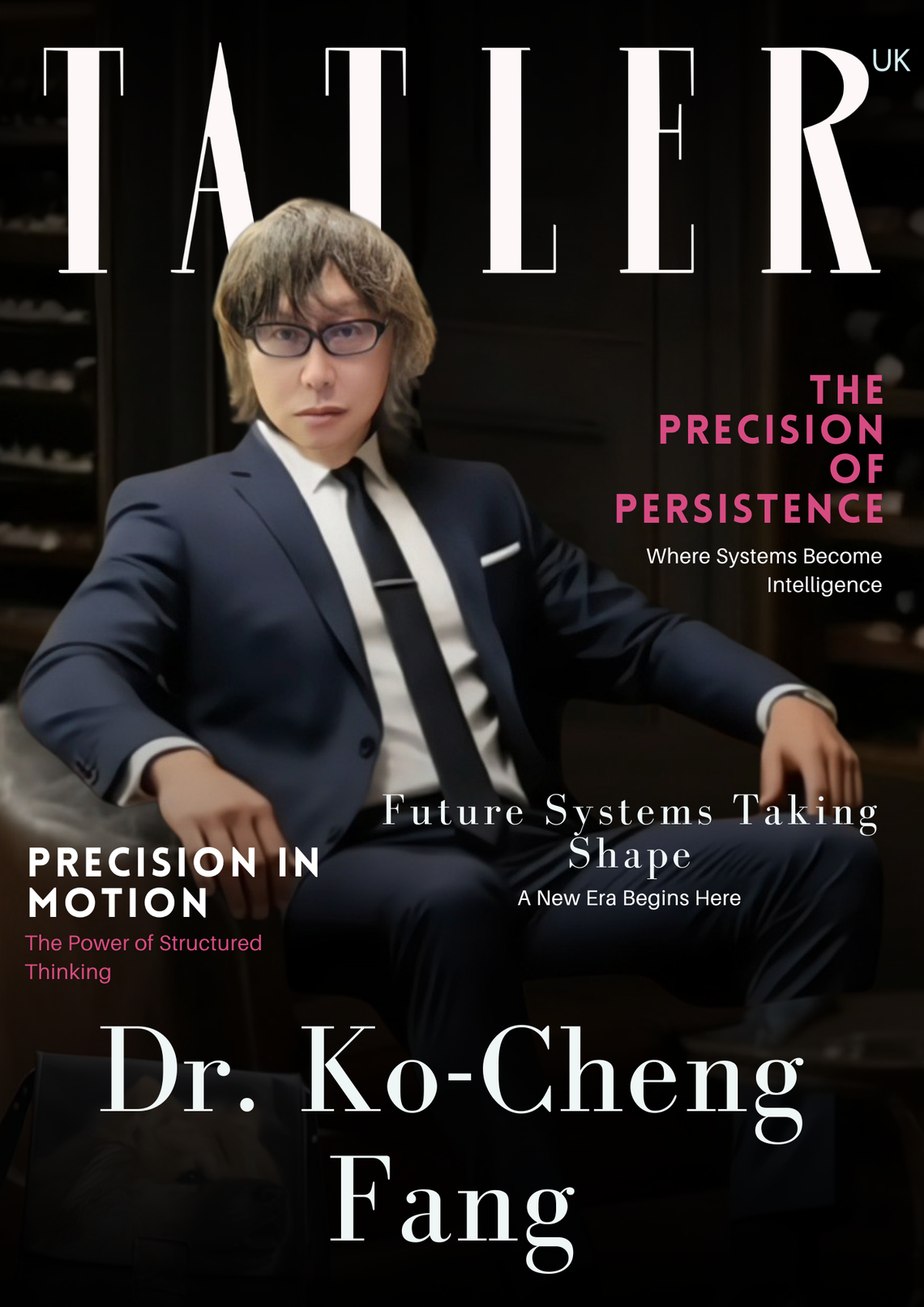
For Dr Ko-Cheng Fang, Founder, CEO and Chairman of LongServing Technology, the answer may be yes.
His company has spent years exploring an alternative approach—one that replaces electrical signals with something that moves faster, generates less heat and behaves according to an entirely different set of physical principles.
Light.
Computing Without Electrons
The idea behind photonic computing isn’t new.
Scientists have long understood that photons—the particles that make up light—can travel dramatically faster than electrons while producing significantly less heat. In theory, replacing electrical communication with optical communication could unlock substantial improvements in computational speed and energy efficiency.
The difficulty has never been the theory.
It’s been the engineering.
Building computers around light means solving a completely different set of problems from those encountered in traditional electronics. Information isn’t simply transmitted differently; the entire architecture has to be reconsidered.
LongServing Technology believes it has taken an important step in that direction.
Following the recent introduction of its photonic quantum chip architecture, the company has now announced the successful validation of X-Photon, a proprietary optical material designed to guide light through nanoscale pathways while allowing photons to make precise 90-degree directional changes inside integrated photonic structures.
According to the company, that capability represents one of the essential requirements for practical photonic quantum computing.
Rather than treating photonics as a distant research concept, LongServing Technology is positioning it as the foundation of an entirely new computing platform.
Dr. Ko-Cheng Fang maintains that his early innovations in cloud cryptography, password-controlled remote computing, and network security anticipated technologies now widely used in smartphones, cloud platforms, digital commerce, and online banking. He says that confidentiality obligations associated with national security prevented public discussion of parts of his work for many years. Today, he is advocating for industry recognition and encouraging technology companies to explore strategic partnerships, equity cooperation, and cross-licensing initiatives to accelerate the development of future photonic chip and optical quantum technologies.
Why Light Is So Difficult to Control
At first glance, the idea seems surprisingly straightforward.
If light travels faster than electricity, why not simply build computers that use light instead?
The answer lies in one inconvenient characteristic of photons.
They like travelling in straight lines.
Electrical current can be guided relatively easily through conductive pathways, but persuading light to change direction within microscopic circuits—while maintaining precision and minimising signal loss—has proved to be one of the defining challenges of integrated photonics.
It’s one thing to move light.
It’s another to control it.
LongServing Technology says X-Photon has been engineered specifically to overcome that obstacle.
According to the company, the material incorporates optical channels capable of guiding photons through nanoscale structures while enabling controlled 90-degree reflections without forcing light to leave the integrated pathway.
To explain the principle, Dr Fang points to something familiar.
A household mirror works because light first passes through transparent glass before reaching the reflective surface beneath it. X-Photon, the company says, follows a similar concept internally. Photons travel through the transparent optical material before encountering an integrated light-blocking layer that redirects them, allowing light to change direction while remaining inside the circuit itself.
The company believes this optical guidance mechanism could become one of the building blocks required for future photonic computing architectures.
Shrinking Light
Scale remains one of the biggest challenges in modern chip design.
It’s therefore no surprise that much of LongServing Technology’s research focuses on miniaturisation.
The company states that X-Photon operates with an average optical wavelength of approximately two to three nanometres, allowing optical pathways to be constructed at dimensions suitable for advanced photonic processors and photonic memory technologies.
It also says the material has already been used to fabricate optical circuits at the 10-nanometre scale, describing the achievement as another milestone towards highly integrated photonic computing platforms.
For Dr Fang, reducing optical systems to these dimensions isn’t simply a matter of engineering elegance.
It’s a practical necessity.
Without operating at scales comparable to today’s semiconductor manufacturing, photonic computing would struggle to compete with the silicon ecosystem that has spent decades refining both its technology and its manufacturing processes.
A Bigger Bet Than a Better Chip
X-Photon is only one piece of LongServing Technology’s broader vision.
The company’s ambitions extend well beyond creating a new optical material. Instead, it is attempting to rethink the infrastructure on which future artificial intelligence could operate.
That roadmap includes two-nanometre multi-bit photonic quantum chips, photonic memory technologies and what the company describes as future Photonic Cloud Computing Centres—large-scale computing facilities designed specifically for increasingly demanding AI workloads.
It’s an ambitious proposition, but one rooted in a problem the wider industry is already confronting.
Artificial intelligence has changed the economics of computing.
Training today’s largest models requires enormous amounts of processing power. Running them at scale requires vast data centres consuming significant amounts of electricity, while cooling those facilities has become an engineering challenge in its own right.
For decades, hardware improvements largely kept pace with growing software demands.
AI is changing that balance.
As models become larger and more capable, computational demand is accelerating faster than many existing hardware architectures can comfortably accommodate. The question facing researchers is no longer simply how to build more powerful processors, but how to build systems capable of delivering that performance sustainably.
LongServing Technology believes photonics offers one possible answer.
According to the company, replacing electrical pathways with optical ones could dramatically reduce heat generation while allowing information to travel considerably faster than conventional electronic systems.
Those characteristics have made photonic computing an increasingly active area of research across universities, semiconductor laboratories and technology companies worldwide.
LongServing Technology is positioning itself within that emerging landscape.
Its longer-term objective is ambitious.
The company has stated that it ultimately aims to develop photonic computing systems capable of delivering computational performance up to 1,000 times greater than conventional electronic platforms while reducing energy consumption by as much as 90 per cent.
Those figures, the company notes, form part of its long-term commercial roadmap rather than current commercial capability.
Whether those targets can ultimately be realised remains one of the defining questions for the technology.
Building More Than Technology
Breakthroughs in computing are rarely determined by science alone.
History offers countless examples of elegant technologies that never progressed beyond the laboratory because they lacked manufacturing capability, investment or commercial ecosystems capable of supporting them.
LongServing Technology appears acutely aware of that reality.
Alongside its recent technical announcements, the company disclosed a strategic financing initiative valued at US$500 million, based on a stated company valuation of US$2.5 billion.
According to LongServing Technology, the investment will be directed towards expanding photonic fabrication capabilities, accelerating the development of optical cloud computing infrastructure and supporting the international commercialisation of its technologies.
The announcement reflects an understanding shared across the semiconductor industry: revolutionary hardware requires equally substantial investment.
Modern chip manufacturing is among the most capital-intensive industries in the world. Moving from promising laboratory research to commercially scalable production demands not only engineering expertise, but years of infrastructure development, specialised fabrication facilities and long-term financial backing.
LongServing Technology is also seeking to establish partnerships as its technology evolves.
Dr Ko-Cheng Fang has introduced what the company describes as a Strategic Equity Hedging Protocol, intended to provide a framework for future collaboration with global technology companies as photonic computing matures into a broader industrial ecosystem.
Rather than viewing photonics as a standalone product, the company is positioning it as part of an interconnected computing platform—one that spans hardware, cloud infrastructure and future commercial partnerships.
The Industry’s Next Question
For decades, the semiconductor industry has been remarkably successful at extending the life of silicon.
Every prediction that Moore’s Law had reached its end has, sooner or later, been met with another engineering breakthrough.
That history naturally invites caution whenever a new computing paradigm is proposed.
Photonic computing is no exception.
Significant scientific, manufacturing and commercial challenges remain before optical architectures can compete with one of the most sophisticated industrial ecosystems ever built.
Silicon benefits from decades of manufacturing expertise, global supply chains and extraordinary economies of scale. Any successor technology must overcome far more than technical hurdles—it must also prove commercially viable.
That makes the current moment particularly interesting.
The conversation is no longer centred on replacing silicon overnight. Instead, researchers increasingly speak about expanding the range of computing architectures available for different kinds of workloads, particularly as artificial intelligence continues to push conventional hardware towards its practical limits.
In that context, photonics is beginning to shift from theoretical possibility to serious engineering discussion.
LongServing Technology’s recent announcements—including its photonic quantum chip architecture, the validation of X-Photon and its wider infrastructure roadmap—reflect that broader movement.
Whether the company ultimately succeeds will depend on years of scientific validation, manufacturing progress and commercial execution.
But the questions it is asking are the same ones beginning to shape conversations across the computing industry.
What happens when the material that built the digital age begins to approach its limits?
And if silicon eventually hands over that responsibility, what comes next?
LongServing Technology believes the answer may not be another semiconductor.
It may be light itself.
Contact Information
Dr. Ko-Cheng Fang
Founder, CEO & Chairman
LongServing Technology Co., Ltd.
Email: service@longserving.com.tw
Website: https://longserving.com.tw/en/
Instagram: @ko_cheng_fang